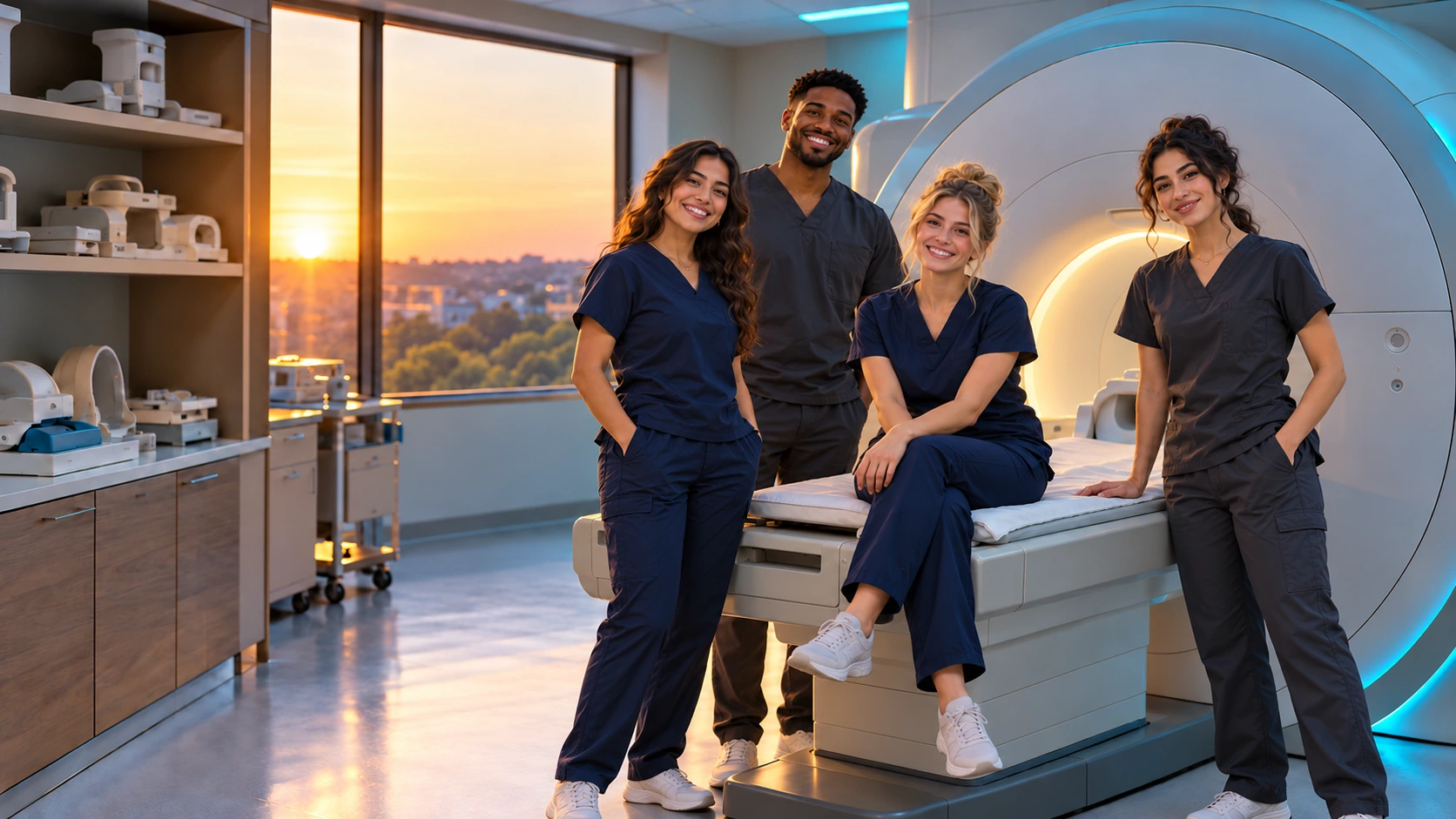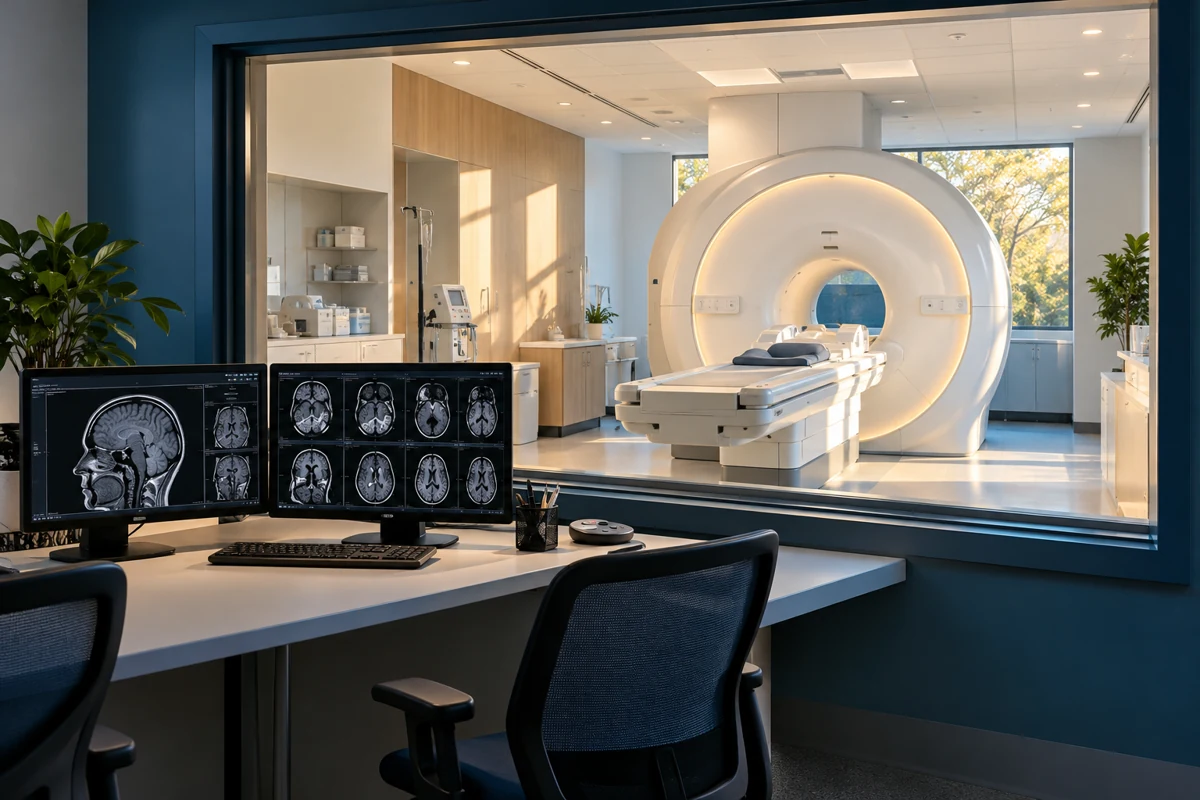

A defined training system
A structured 12-module clinical pathway mapped to your requirements before the cohort begins.
Expand your program’s clinical capacity with supervised hands-on MRI training, real clinical workflows, and documented competency development — all through one managed training system.


Your program builds the academic foundation. We help students turn that foundation into clinical reflexes — through supervised practice, repetition, feedback, and documented standards.
Screen, verify, communicate, and escalate. Students build the habits that protect patients before they build scanning speed.
Positioning, coils, patient communication, workflow, and image review are practiced under supervision until the steps make sense together.
Competency logs, individual evaluations, and readiness assessments convert clinical experience into documented progress for the student and the program.
Students learn the work the way the work happens: guided, repeated, reviewed, and connected to patient care. The goal is not just exposure — it is better judgment with every repetition.

Hands-on practice with an experienced MRI professional close enough to correct the details.


Clinical readiness is more than knowing what button to press. Students learn the pace, preparation, patient communication, equipment setup, and professional habits that make an MRI department run.
Instead of sending students to a site and hoping the experience is consistent, you gain a managed clinical training partner with defined standards, coordination, reporting, and accountability.
A structured 12-module clinical pathway mapped to your requirements before the cohort begins.
We coordinate placement scheduling, attendance, and reporting so faculty are not managing calendars and chasing records.
Students must meet defined safety standards before advancing to live scanner participation. Stop. Verify. Escalate.
Individual competency logs, evaluations, and readiness reporting give your program a clear record of student progress.
Let’s map your student count, start date, clinical requirements, and available capacity before placements become a scramble.
Clinical training is where classroom knowledge becomes judgment, confidence, and routine. Students move through a supervised progression designed to make the real workflow feel familiar before the first day on the job.
Explore the student experience →Screening, patient communication, room preparation, positioning, coils, and the habits that protect patients before scanning begins.
Work through real orders, patient setup, scan preparation, protocol planning, image review, and supervised scanner workflows.
Competency documentation, instructor feedback, scenario-based assessment, and a final readiness determination before completion.
Clinical hours matter. What students become during those hours matters more.
We build toward three outcomes: the student understands the clinical environment, can demonstrate core competencies, and is prepared to step into the workforce with confidence.
Safety, patient care, positioning, workflow, and scan preparation are practiced until the process becomes familiar.
Supervised experience, evaluations, competency logs, and readiness assessment document what each student can actually do.
The end goal is not a completed rotation. It is a new technologist with the practical foundation employers expect on day one.
of students trained across our programs and clinical environments.
structured modules from orientation through clinical readiness.
patient-care workflows and hands-on clinical training.
Our students consistently arrive at clinical sites more prepared and more confident.
MRI Program DirectorPractical guidance for MRI programs, students, and future technologists — from clinical placement and safety to career preparation.

The training path, certification, and what employers look for.
Read article →
Why screening, verification, and safety habits matter before a scan begins.
Read article →What should program directors look for in a placement site? Start with supervision, structure, documentation, and the environment where students actually train.
Tell us how many students you need to place, when they are ready to begin, and what your program requires. We’ll take it from there.